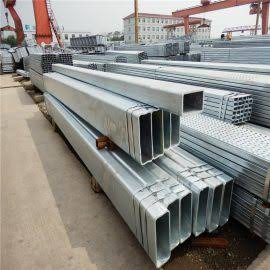
A hollow steel section has become an important material in modern construction, engineering, fabrication, and infrastructure because it combines structural strength with efficient material usage. Unlike solid steel products, hollow structural sections are manufactured with an open interior and a closed external profile. This design allows engineers and fabricators to achieve useful strength, stiffness, and durability while maintaining practical weight and dimensions.
Common forms of hollow steel sectioninclude square hollow section, rectangular hollow section, and circular hollow section. Each profile offers different structural characteristics and can be selected according to loading conditions, architectural requirements, fabrication methods, and project specifications. From building frames and columns to bridges, machinery, industrial structures, and architectural features, hollow steel profiles provide a versatile solution for many applications.
As construction projects increasingly focus on material efficiency, dependable performance, and flexible design, understanding the characteristics and applications of hollow steel section products can help engineers, contractors, architects, and buyers make informed material decisions.
Hollow Steel Section and Structural Performance
A hollow steel section is a steel profile with a closed cross-sectional shape. The most common configurations are square, rectangular, and circular. These products are often referred to as hollow structural sections, or HSS, and are manufactured in different sizes, wall thicknesses, and steel grades.
One of the main benefits of hollow structural steel is its efficient distribution of material. Instead of placing steel throughout a solid cross-section, the material is positioned around the perimeter of the profile. This geometry can provide strong resistance to bending, compression, and torsional forces while reducing unnecessary material in the center.
A square hollow section has equal width and height, providing symmetrical structural properties in two directions. This makes square steel tubing suitable for columns, frames, supports, machinery structures, gates, railings, and architectural applications. Its consistent geometry also makes it convenient for fabrication and connection.
A rectangular hollow section provides a different proportion between width and height. This can be useful when engineers need a particular structural depth or when architectural requirements call for a specific profile. Rectangular steel sections are widely used in building frames, beams, supports, platforms, and fabricated structures.
A circular hollow section has a rounded profile and can provide useful resistance to forces from different directions. Circular steel tubing is frequently used in columns, towers, trusses, handrails, structural supports, and architectural designs where a smooth appearance is preferred.
The structural performance of any hollow steel section depends on several factors, including steel grade, dimensions, wall thickness, loading conditions, connection design, and environmental exposure. Engineers therefore select profiles based on calculations and applicable structural standards rather than simply choosing a section based on appearance.
Hollow Steel Section Applications in Construction
The versatility of hollow steel section products allows them to serve many purposes across construction and engineering. In commercial and residential buildings, hollow structural sections can be used for columns, beams, bracing, roof structures, frames, supports, and architectural components.
In industrial buildings, steel hollow sections can form part of large structural frameworks. Warehouses, factories, workshops, storage facilities, and production buildings may use square and rectangular steel sections because they can provide structural support while remaining relatively easy to fabricate and assemble.
Infrastructure is another important application area. Bridges, pedestrian walkways, transportation structures, utility supports, and industrial platforms may incorporate hollow steel profiles. Their closed geometry can offer useful structural properties while allowing designers to develop efficient and visually clean structures.
Architectural construction also benefits from hollow steel tubing. Modern buildings often feature exposed steel frames, canopies, entrance structures, staircases, partitions, and decorative metalwork. A clean rectangular or square profile can create a contemporary appearance while serving a functional structural purpose.
In manufacturing and fabrication, steel hollow section products are commonly used for equipment frames, machine supports, agricultural structures, storage systems, protective barriers, trailers, and custom metal assemblies. Their ability to be cut, drilled, welded, and fabricated makes them suitable for both standardized and customized projects.
Hollow sections can also be useful in situations where weight needs to be managed. Because the interior is empty, the finished component can provide useful structural capacity without requiring the same quantity of steel as a solid profile of comparable external dimensions. This can make handling and transportation more practical in suitable applications.
Manufacturing, Grades, and Quality Factors
The manufacturing process has a direct influence on the quality and performance of a hollow steel section. Steel is formed into the required profile using controlled production processes, and the resulting section is sized and finished to achieve the required dimensions and tolerances.
Hollow sections may be produced through different manufacturing techniques, depending on the product type, dimensions, steel grade, and applicable standards. Welded hollow sections are widely used in structural applications, while other specialized steel tubing products may be manufactured using different processes.
Steel grade is an important consideration because it determines properties such as yield strength, tensile strength, ductility, toughness, and weldability. The appropriate grade should be selected according to the project's engineering requirements and applicable standards.
Wall thickness also affects structural performance. A thicker-walled hollow section may provide increased resistance to certain loads, while a lighter section may be suitable for applications where weight and material efficiency are priorities. Engineers evaluate these factors together with section dimensions and loading requirements.
Quality inspection is another important part of purchasing structural steel. Dimensional accuracy, wall thickness, surface condition, mechanical properties, chemical composition, and weld quality may all be evaluated according to the applicable specification.
For professional construction projects, buyers may also require material certificates and inspection documentation. Such records can help confirm that the supplied hollow structural steel section meets the specified grade and relevant quality requirements.
Corrosion protection should also be considered. Although steel is durable, exposure to moisture, chemicals, salt, and other environmental factors can lead to corrosion. Depending on the application, painting, galvanizing, protective coatings, or other corrosion-control measures may be used to improve service life.
Hollow Steel Section in Efficient and Sustainable Design
Material efficiency is increasingly important in modern construction, and hollow steel section products can support optimized structural design. Their geometry allows steel to be concentrated around the exterior of the profile, which can provide favorable structural characteristics without filling the entire cross-section with material.
Steel also has the advantage of being recyclable. At the end of a structure's service life, steel components can potentially be recovered and recycled, supporting more circular approaches to construction and manufacturing.
Prefabrication is another area where hollow structural sections provide value. Components can be cut, drilled, welded, and assembled in controlled manufacturing environments before being transported to the construction site. This can improve consistency and help reduce some on-site fabrication activities.
The clean appearance of hollow steel profiles can also reduce the need for additional architectural treatment in certain exposed applications. Square and rectangular sections can provide simple geometric lines that complement contemporary building designs.
For engineers and architects, the combination of structural efficiency, fabrication flexibility, recyclability, and visual appeal makes hollow steel section an attractive option for many modern projects.
Conclusion
A hollow steel section provides a versatile combination of strength, stiffness, efficient material use, fabrication flexibility, and modern appearance. Square hollow sections, rectangular hollow sections, and circular hollow sections each offer different characteristics that can be matched to specific structural and architectural requirements.
These steel profiles are widely applicable in buildings, industrial facilities, infrastructure, machinery frames, bridges, platforms, architectural structures, and custom fabrication. Selecting the appropriate hollow structural section requires careful consideration of steel grade, dimensions, wall thickness, loading conditions, connections, corrosion exposure, and applicable standards.