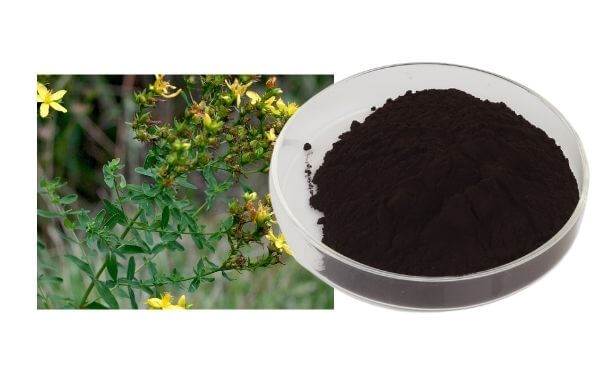
For centuries, the bright yellow flowers of Hypericum perforatum have been harvested at the height of summer, their golden petals concealing a deep red pigment that has fascinated healers since ancient times. Today, that same plant—known to most as St. John's Wort—has become one of the most thoroughly researched botanical ingredients in the global nutraceutical market. And increasingly, the extract that finds its way into supplements, skincare, and functional foods around the world begins its journey with a supplier in China.
A Plant with Deep Roots
St. John's Wort has a history that stretches back to the ancient Greeks. Physicians including Hippocrates documented its use for everything from wound healing to nerve pain . The plant's name derives from its traditional harvest around St. John's Day (June 24th), when the flowers reach their peak potency. Medieval herbalists prized it for its ability to ward off evil spirits, while battlefield medics applied St. John's Wort oil to wounds and burns for its soothing and antiseptic properties .
The plant itself is remarkably resilient. Native to Europe, western Asia, and North Africa, it now grows in temperate regions worldwide, thriving in dry, sunny locations up to 1500 metres in altitude . When you crush the yellow flower buds, a blood-red juice emerges—this is hypericin, the naphthodianthrone compound that gives the plant both its characteristic colour and much of its therapeutic potential .
Understanding the Active Components
Modern science has identified over 150 constituents in St. John's Wort that work in synergistic, additive, and antagonistic manners to produce its effects . The most studied compounds fall into several categories:
Hypericin and Pseudohypericin are the naphthodianthrones that first caught researchers' attention. These compounds occur in concentrations ranging from less than 0.1% to 0.15% in the raw plant, though levels can vary significantly depending on harvest timing, drying methods, and storage conditions . The flowers, buds, and top leaves contain the highest concentrations.
Hyperforin and Adhyperforin belong to the phloroglucinol class and appear in concentrations of 2% to 4%. These compounds play a significant role in the plant's neurological effects .
Flavonoids including quercetin, rutin, and hyperoside occur at levels up to 12% in flowers and approximately 7% in leaves and stalks, contributing antioxidant and anti-inflammatory properties .
The complexity of this phytochemical profile means that whole-herb extracts often provide benefits that isolated compounds cannot replicate—a phenomenon herbalists refer to as synergy.
The Supplier Landscape in China
China has emerged as a major source of St. John's Wort extract for the global market. Manufacturing hubs in Shaanxi, Hunan, and Shandong provinces host facilities that combine traditional botanical knowledge with modern extraction technology.
What do reputable Chinese suppliers offer? The typical product profile includes:
Standardized Specifications: Most commercial extracts are standardized to 0.3% hypericins measured by UV spectrophotometry or HPLC . Some suppliers also offer hyperforin-standardized extracts at 3% or 5% . The 10:1 extraction ratio—meaning ten parts of plant material yield one part of extract—is common for maintaining consistency .
Physical Characteristics: The extract presents as a fine brown to dark red powder with the characteristic herbal, slightly bitter taste and earthy aroma of the parent plant . It typically passes through 80-120 mesh, ensuring good flow properties for encapsulation and tableting.
Quality Certifications: Leading manufacturers maintain ISO22000, HACCP, Kosher, and Halal certifications. They provide Certificates of Analysis with every batch, documenting heavy metal content (typically below 10ppm), microbiological purity, and active compound concentrations . Many offer third-party testing through laboratories like SGS or Eurofins.
Flexible Packaging: Suppliers accommodate both small-scale formulators and large manufacturers, with Minimum Order Quantities starting at 1 kilogram for sampling and R&D, while bulk orders ship in standard 25kg fibre drums .
Therapeutic Applications Across Categories
The versatility of St. John's Wort extract explains its enduring popularity in multiple product categories.
Mood and Emotional Support
This remains the flagship application. Meta-analyses of clinical trials suggest that St. John's Wort is more effective than placebo for mild to moderate depression and compares favourably with standard antidepressants, while being associated with fewer and milder adverse reactions . The mechanism appears to involve inhibition of neurotransmitter reuptake—specifically serotonin, dopamine, and norepinephrine—similar to conventional pharmaceutical approaches but with a gentler side effect profile .
Clinical trials have commonly used 900 mg of extract daily in three divided doses for up to 12 weeks . Formulators incorporate the extract into capsules, tablets, and tinctures targeting stress relief, occasional anxiety, and emotional balance.
Skin Health and Topical Applications
Before St. John's Wort became known as a mood herb, it was a wound herb. Traditional use includes external application for minor burns, cuts, bruises, and skin irritations . Modern research supports these applications—the anti-inflammatory and antiseptic properties make it valuable in creams, ointments, and oils.
A traditional oil preparation involves infusing fresh flowering tops in olive oil for two weeks, yielding a characteristic red colour . Commercial skincare products incorporate standardized extracts for soothing irritated skin, supporting healing, and reducing redness.
However, formulators must note the photosensitivity concern. Hypericin can increase sensitivity to sunlight, making it important to consider product positioning—night-time applications or rinse-off products are common approaches .
Women's Health
Evidence supports St. John's Wort for managing some climacteric symptoms in menopausal women . It may help with mood fluctuations and other aspects of the menopausal transition, sometimes combined with other botanicals like black cohosh or chasteberry.
Antiviral and Immune Support
Hypericin has demonstrated biological activity against viruses in research settings, leading to interest in applications for immune support . The animal health sector incorporates St. John's Wort extract into feed additives for poultry and livestock to support general wellness.
Important Considerations for Formulators
Working with St. John's Wort extract requires attention to several factors beyond basic quality specifications.
Drug Interactions: St. John's Wort induces cytochrome P450 enzymes, particularly CYP3A4, which affects how the body metabolizes numerous medications . This can reduce the efficacy of oral contraceptives, anticoagulants like warfarin, antiretrovirals, certain cancer treatments, and immunosuppressants . Clear labelling and consumer education are essential.
Photosensitivity: Some individuals may experience increased sensitivity to sunlight, particularly with higher doses or topical application. This should be noted in product information.
Consistency Challenges: Because St. John's Wort contains numerous active compounds, standardization to key markers like hypericin or hyperforin helps ensure batch-to-batch consistency. Suppliers who provide comprehensive Certificates of Analysis demonstrating this consistency are valuable partners.
Sourcing with Confidence
When evaluating potential suppliers of St. John's Wort extract, several practices distinguish reliable partners:
Sample testing: Reputable suppliers offer free samples, allowing you to verify quality before committing to bulk orders .
Documentation: Look for suppliers who provide full Certificates of Analysis including active compounds, heavy metals, microbiology, and residual solvents.
Third-party certification: ISO, GMP, Kosher, and Halal certifications indicate a commitment to quality systems.
Transparent communication: Suppliers who clearly explain their sourcing, extraction methods, and quality control processes demonstrate confidence in their product.
The Future of an Ancient Herb
St. John's Wort has travelled a remarkable journey from medieval charm bags to pharmacy shelves. Its continued relevance reflects both the robustness of the traditional knowledge surrounding it and the rigor of modern scientific investigation.
For manufacturers and formulators, Chinese suppliers offer access to this heritage ingredient with the consistency and documentation required for today's regulated markets. Whether destined for a mood-support supplement in Europe, a skincare product in North America, or a functional food in Asia, properly sourced St. John's Wort extract carries forward a therapeutic tradition that has served humanity for millennia.
The golden flower, properly processed and thoughtfully formulated, continues to find new applications while remaining true to its ancient roots.