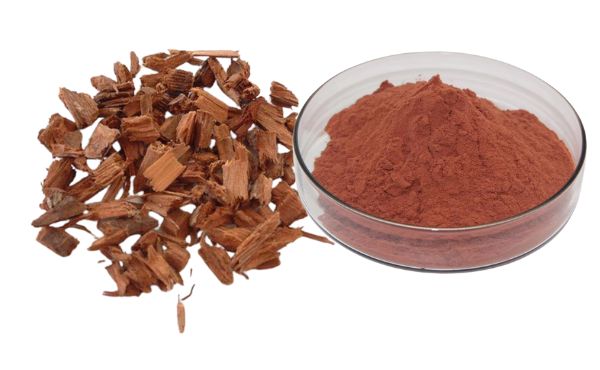
When formulating functional foods, nutraceuticals, or cosmeceuticals, the difference between a product that works and one that merely exists lies in the quality of its active components. As global demand for plant-derived ingredients surges, China continues to dominate the supply chain through specialized biotech and botanical extractmanufacturers concentrated in Guangdong, Jiangxi, Shaanxi, and Hunan provinces, regions that combine agricultural access, advanced processing infrastructure, and export readiness. Yet within that abundance, identifying genuinely effective and specialized ingredients requires understanding not just who the suppliers are, but how their technical capabilities translate into tangible product performance.
What Makes an Extract Truly "Effective"?
Effectiveness begins with active compound concentration. A supplier that cannot consistently standardize its extracts to guaranteed potency levels cannot deliver predictable results in your finished product. For ingestible formulations, purity is the primary indicator, with research-grade active monomers generally requiring ≥95% to 98% purity. That is why serious buyers should request batch-specific Certificates of Analysis that verify active compound content—for example, confirming that an epimedium extract is standardized to 10% to 98% icariin, or a corosolic acid batch to 1% to 98% purity.
Beyond concentration, bioavailability matters. A highly pure compound is useless if it cannot be absorbed. Top-tier Chinese suppliers now offer water-soluble formulations and custom particle-size reduction (80 to 500 mesh) to improve dissolution rates, particularly for functional foods and beverage applications. Some also provide specialized formats ranging from lotions and pastes to tablets, capsules, and granules, enabling formulators to match the physical properties of an ingredient to their specific delivery system.
Moreover, specialized suppliers in China are increasingly moving beyond standardized powders to produce isolated active monomers—single compounds extracted to high purity for targeted therapeutic effects. Companies like Changsha Staherb, for instance, maintain product lines that include ursolic acid from 25% to 98%, amygdalin from 50% to 98%, and over 600 additional high-purity monomer plant compounds, with the ability to scale from milligrams to tons. This level of specialization signals genuine technical depth, not mere repackaging.
The Technology Behind the Ingredient: Extraction Methods That Matter
An extract is only as good as the process that produces it. Leading suppliers have moved far beyond simple water or ethanol percolation. Three advanced extraction technologies now define the industry's leading edge.
Supercritical CO₂ extraction, a method some suppliers have been refining since the 1980s, operates at low temperatures (35-40°C), which means heat-sensitive compounds like curcumin (which begins degrading above 60°C) remain intact. The process leaves no chemical residue, making it the preferred method for organic-certified production. Field data from a rose oil facility demonstrates the practical advantage: traditional steam distillation yielded 0.3 kg of oil from 100 kg of rose petals over three hours, with 20% impurity content. Switching to supercritical CO₂ extraction increased yield to 0.45 kg, reduced processing time to 40 minutes, cut impurities to under 5%, and increased linalool retention from 60% to 92%—allowing the manufacturer to raise the wholesale price from 1,100USDto1,100USDto3,300 USD per kilogram.
Ultrasound-assisted extraction, by contrast, offers a far more accessible entry point. A facility processing konjac found that adding a 11,000USDultrasonicsystemcutextractiontimefromthreedaystotwohours,increasedyieldfrom600kgto920kgpertonofrawmaterial,andboostedpurityfrom8511,000USDultrasonicsystemcutextractiontimefromthreedaystotwohours,increasedyieldfrom600kgto920kgpertonofrawmaterial,andboostedpurityfrom852 USD to 6USDperkilogramandaddover6USDperkilogramandaddover2.7 million USD in annual profit. The technology works by generating microscopic cavitation bubbles that physically rupture plant cell walls without chemical solvents, and for most compounds, it raises extraction yields by 30% to 50%.
Enzyme-assisted extraction uses biological catalysts—cellulase, pectinase, and others—to precisely break down plant cell walls while preserving the target compounds inside. This approach is particularly valuable for flavonoids and phenolic compounds, where maintaining molecular integrity is essential to biological activity.
Not every supplier has mastered these technologies, and that is precisely the point. Asking a potential partner about their primary extraction methods and the equipment they operate is one of the fastest ways to separate genuine manufacturers from commodity traders.
How to Distinguish a Specialized Supplier
China is home to thousands of botanical extract companies, but generalist traders and genuine specialized manufacturers operate very differently. Here is a practical evaluation framework.
Technical specificity. Look for suppliers with a focused product range. A company listing over 800 SKUs across multiple dosage forms, or one that offers more than 500 authentic medicinal materials as raw inputs, suggests serious investment in phytochemical isolation and powder formulation. Examine their product catalog for evidence of depth: multiple concentration grades of the same extract (e.g., epimedium in 10%, 30%, 60%, and 98% purity), superfine milled powders down to 400 mesh, or custom ratio blends. Shallow, undifferentiated catalogs are a red flag.
In-house testing capability. Suppliers who cannot test their own products rely on third-party labs, which adds time, cost, and inconsistency. Advanced manufacturers maintain internal HPLC and GC equipment to quantify active compounds batch by batch. Some operate CNAS-certified in-house laboratories adhering to national GMP regulations, allowing them to issue batch-specific Certificates of Analysis with corresponding HPLC chromatograms that visually reflect purity levels and ensure quality consistency across shipments. Testing capability also extends to contaminant screening: heavy metals, pesticide residues, and microbial limits must be verified for any ingestible product, particularly for regulated markets like dietary supplements or cosmetics.
Integration and traceability. Vertically integrated operations—where the supplier manages cultivation, harvesting, extraction, and packaging—provide the strongest quality control. Many established Chinese manufacturers have set up dedicated raw material bases across multiple provinces, maintaining long-term relationships with local farming cooperatives to ensure consistent supply and traceability from farm to final product.
Certification portfolio. While certifications alone do not guarantee quality, they serve as useful screening tools. ISO 9001 (quality management) and ISO 22000 (food safety) are baseline expectations for food-grade operations. For pharmaceutical and cosmetic applications, GMP certification is essential. For international trade, Kosher and Halal certifications may be required depending on your target markets. Suppliers exporting to North America often maintain FDA registration and NSF cGMP status, while those targeting Europe may hold ECOCERT or USDA Organic certifications.
Building a Sustainable Sourcing Strategy
The most successful procurement relationships emerge from a systematic, multi-stage process. Begin by shortlisting suppliers based on their specialization and technical alignment with your product requirements. Request samples and subject them to independent third-party testing before any large commitment. Evaluate operational metrics such as on-time delivery rates (aim for ≥98%) and response times (≤2 hours is industry best practice) as proxies for overall operational discipline. Whenever possible, conduct virtual facility audits or request factory videos to verify production capabilities. Use secure payment channels and start with smaller orders to evaluate consistency before scaling up.
The global botanical ingredient market rewards buyers who do their homework. Generic extracts from undifferentiated suppliers may meet a price point, but they rarely deliver the reliable, reproducible activity that effective products require. By understanding the technology that drives active compound preservation, the testing protocols that verify potency, and the evaluation criteria that distinguish specialized suppliers from general traders, procurement professionals can build supply chains that consistently deliver on performance—not just on paper.