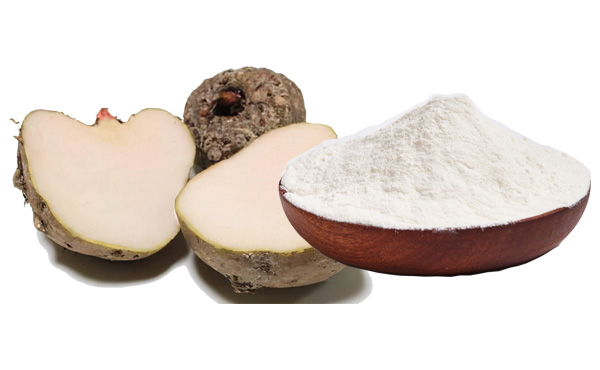
In the world of functional ingredients, few have the unassuming yet potent profile of konjac glucomannan. Derived from the bulb of the Amorphophallus konjac plant, this soluble dietary fiber is a staple in foods, supplements, and cosmetics, prized for its remarkable water-absorbing capacity and gentle, gelatinous texture. For businesses needing this ingredient by the drumload or the pallet, the supply chain inevitably converges on a single point: China. Sourcing wholesale konjac glucomannan from Chinese suppliers is a specific, detail-driven endeavor, one defined by geography, grade, and rigorous verification.
China’s dominance in konjac production isn't accidental; it's agricultural fact. The konjac plant thrives in the mountainous, subtropical regions of central and southwest China, particularly in provinces like Sichuan, Yunnan, and Guizhou. For generations, farming has been localized there, creating a deep-rooted expertise and an established infrastructure for cultivation. This concentration means China controls the vast majority of the global raw material supply. When you buy konjac glucomannan anywhere in the world, you are almost certainly buying a product processed from roots grown in Chinese soil. For wholesale buyers, this makes engaging directly with suppliers at the source a logical, often necessary, step.
The term "konjac glucomannan" on a spec sheet, however, is just the starting point. Not all glucomannan is created equal, and understanding the grades is crucial. The key differentiator is purity, expressed as a percentage of viscous dietary fiber. Commercial grades typically range from 70% to over 95% purity. A 70-80% grade, often a simple flour, is suitable for some lower-cost food applications where a slight konjac odor or color is acceptable. For dietary supplements, clear gels, or high-end cosmetic formulations, a 90-95% pure, refined powder is the standard. This high-purity version is a near-odorless, off-white powder that forms a clear, high-viscosity gel. Knowing your application’s tolerance for purity is the first question to answer before contacting suppliers.
Working with a Chinese supplier on this ingredient presents a clear set of practical realities. The primary advantage is direct access to the source, which can translate to competitive pricing and greater supply security, especially for large, consistent orders. Many established suppliers are vertically integrated, managing the process from farm cooperatives to their own milling, extraction, and drying facilities. This control can help standardize the raw tuber quality that enters the production line.
However, this landscape demands a proactive and verification-focused approach. The market includes everything from large, FDA-registered, ISO-certified factories to smaller, regional mills. This disparity makes the initial qualification phase critical. The core of any professional relationship must be built on transparent, testable data. A reliable supplier’s language is documentation. You should expect and insist on a detailed technical data sheet and, most importantly, a batch-specific Certificate of Analysis (CoA) for any material you consider.
This CoA is the cornerstone of the purchase. For konjac glucomannan, it must provide two essential sets of facts. First, it must confirm the core specification: the percentage of glucomannan (dietary fiber). This is the active metric, not just "total carbohydrate." Second, it must provide a full safety profile. This includes residual sulfur dioxide (SO2) levels, as sulfur compounds are often used in traditional drying; heavy metals (lead, arsenic, cadmium, mercury); microbial counts (total plate count, yeast, mold, E. coli, Salmonella); and pesticide residues. The SO2 level is particularly relevant for konjac and a key differentiator between food and supplement grades. A supplier unable or unwilling to provide a comprehensive, third-party-verified CoA should be avoided.
Beyond the powder itself, logistics and compliance are part of the product. Clarify the supplier's standard Minimum Order Quantity (MOQ), which for wholesale can range from 500kg to a full 20-foot container. Discuss packaging—it’s typically sealed in plastic-lined 25kg fiber drums or kraft bags to prevent moisture absorption, which is glucomannan’s chief enemy. Finally, ensure the supplier has direct experience exporting to your market. Can they provide the necessary documentation for your country’s food or supplement authorities? Their familiarity with these export mechanics is a strong indicator of overall professionalism.
Sourcing wholesale konjac glucomannan from China is, fundamentally, a pragmatic exercise in global agriculture and food science. It connects the terraced hills of Yunnan to manufacturing facilities worldwide. There is no secret, only specification. The goal is not to find the cheapest powder, but the most reliable partner—one whose laboratory controls are as robust as their farming networks, whose CoAs are precise and honest, and whose communication is clear and consistent. In an industry built on trust and measurable results, this straightforward, detail-oriented reliability is what turns a simple root powder into a trusted, global ingredient.