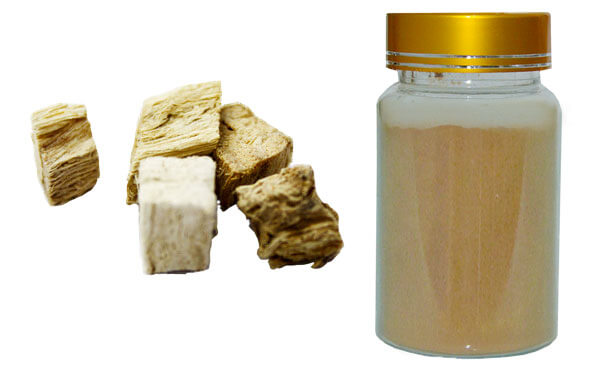
For centuries in traditional Chinese medicine, a tangled, fast-growing vine known as Pueraria lobata, or kudzu, has been a go-to source for balance and support. Today, its concentrated power—kudzu root extract—is a global commodity, finding its way into herbal supplements and wellness formulas from London to Los Angeles. For many brands, the journey to procure this ingredient in volume leads directly to Chinese suppliers, a relationship built as much on ancient history as on modern agricultural and chemical logistics. This isn't a story of miraculous transformation, but a practical look at sourcing a botanical where its story began.
China's position as a primary source for wholesale kudzu extract is deeply rooted, literally and figuratively. The plant is native to much of East Asia, including China, where it has been cultivated and utilized for its medicinal properties for over two thousand years. This isn't a newly adopted cash crop; it's a historical mainstay. The primary growing regions, often in central and southern China, have developed significant agricultural expertise around kudzu, allowing for the large-scale, consistent harvesting necessary for wholesale extraction. This scale is the first, fundamental reason global buyers look east.
When you engage with a supplier for kudzu root extract, you are primarily negotiating for specific, measurable compounds. The activity and value of the extract are defined by its standardization. The most critical markers are the unique isoflavones found in the root: puerarin, daidzin, and daidzein. A standard extract might be guaranteed to contain a minimum of 20%, 30%, or even 40% total isoflavones, with puerarin often being the dominant component. This standardization is non-negotiable for professional use; it's what guarantees that a capsule or tablet has a reliable, doseable effect, batch after batch. The extract typically comes as a fine, brownish-yellow to off-white powder with a characteristic earthy, slightly sweet taste.
Working with a Chinese supplier in this space offers distinct practical advantages. The most obvious is cost-effectiveness, driven by integrated cultivation and processing. Many established suppliers control the supply chain from managed farmland to the extraction facility, reducing middleman costs and providing more stability in raw material quality and pricing. Furthermore, decades of focus on this specific botanical have refined extraction techniques. Many facilities employ methods like water or ethanol extraction, followed by resin purification, to efficiently concentrate the active isoflavones to the specified levels.
However, the path is not without its necessary checks and balances. The market contains a wide range of operators, from highly sophisticated, GMP-certified factories to smaller, less transparent workshops. This variation makes supplier qualification a critical first step. The foundation of any professional relationship here must be verifiable data. A credible supplier will proactively provide a detailed specification sheet and, more importantly, a Certificate of Analysis (CoA) for every batch.
This CoA is the heart of the transaction. It must do two things: confirm the active compounds and ensure safety. First, it needs to validate the claimed potency of isoflavones through tested methods like HPLC. A document that simply states "40% extract" is meaningless; it must specify "40% total isoflavones." Second, and equally vital, it must report results for contaminants: heavy metals (lead, arsenic, cadmium, mercury), pesticide residues, microbial limits, and aflatoxins. For an ingredient destined for human consumption, these numbers are as important as the potency figures. Requesting a sample batch CoA before placing a major order is standard and prudent practice.
Beyond the lab results, practical business considerations shape the partnership. Minimum Order Quantities (MOQs) can vary widely. A large-scale manufacturer might have an MOQ of 100 kilograms or more, while a trading company might offer smaller quantities at a higher price. Understanding your own needs and their business model is key. Furthermore, clarity on logistics is essential. Discuss incoterms—is the price FOB Shanghai, or CIF to Los Angeles? Confirm the supplier's experience with exporting to your specific country, including their familiarity with the necessary documentation for customs and your local regulatory body, be it the FDA, EFSA, or others.
Ultimately, sourcing wholesale kudzu root extract from China is a straightforward exercise in supply chain management for a botanical with deep local roots. Success lies in a clear-eyed, detail-oriented approach. It's about partnering with a supplier whose technical capability is matched by their transparency. The goal is to secure an ingredient that is both effective and safe, where the paperwork tells a complete and honest story about what's in the bag. In the world of herbal sourcing, this reliable, unvarnished quality is the true measure of value, connecting a centuries-old tradition to the shelves of modern commerce without fanfare, but with firm expectations.